

 Adventure Tours
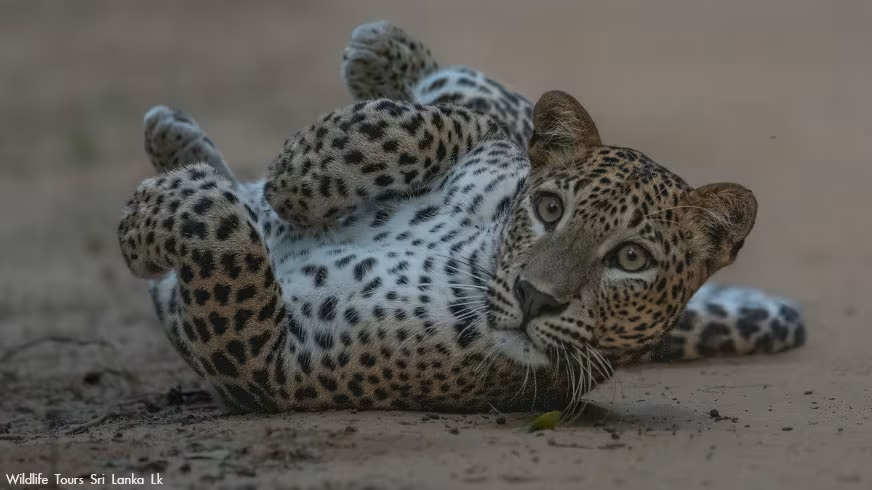
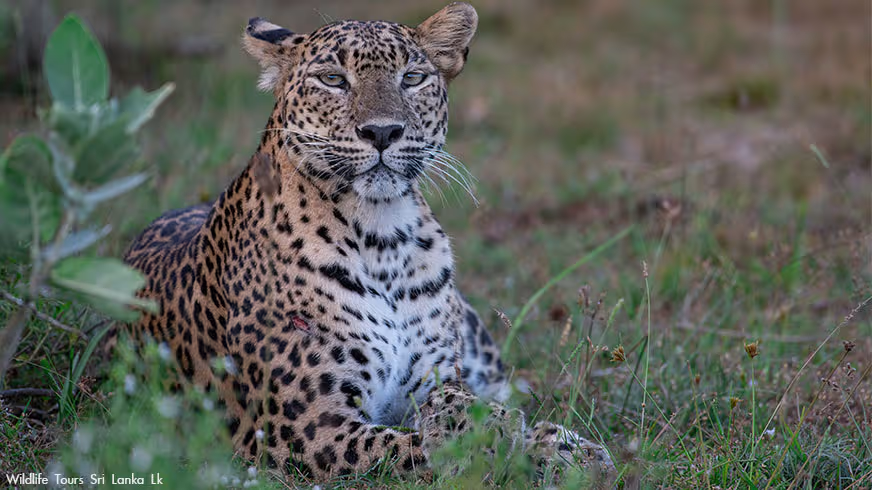
The Sri Lankan leopard (Panthera pardus kotiya) is one of the most fascinating animals found in Sri Lanka. With its distinctive golden coat, dark rosettes and powerful presence, this magnificent big cat is one of the country’s most sought-after wildlife species.
Unlike many other leopard populations around the world, the Sri Lankan leopard has evolved on an island where it occupies a wide variety of habitats, from dry-zone forests and grasslands to montane and wet-zone environments. It is also an apex predator in Sri Lanka’s terrestrial ecosystems, playing an important role in maintaining ecological balance.
For wildlife enthusiasts, photographers and nature lovers, seeing a Sri Lankan leopard in the wild can be one of the most memorable experiences of a trip to Sri Lanka.
What Is the Sri Lankan Leopard?
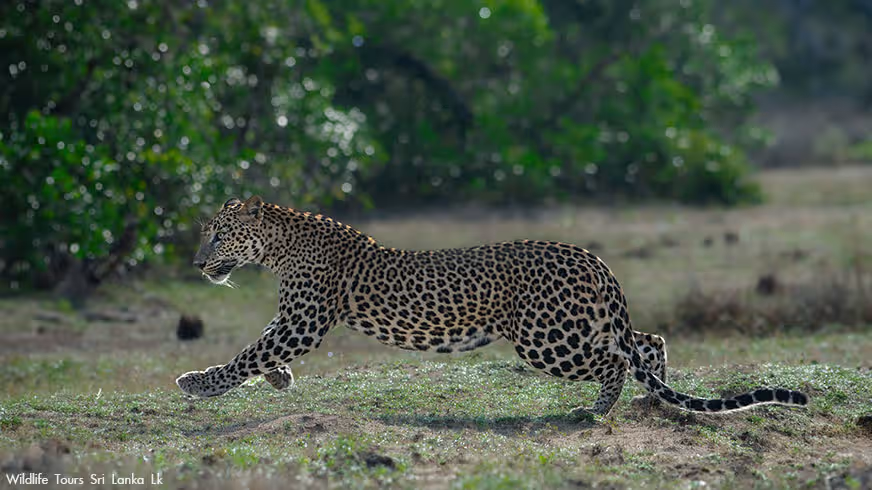
The Sri Lankan leopard is the leopard population native to Sri Lanka and is scientifically known as Panthera pardus kotiya. Scientific research recognizes it as an endemic leopard subspecies of Sri Lanka.
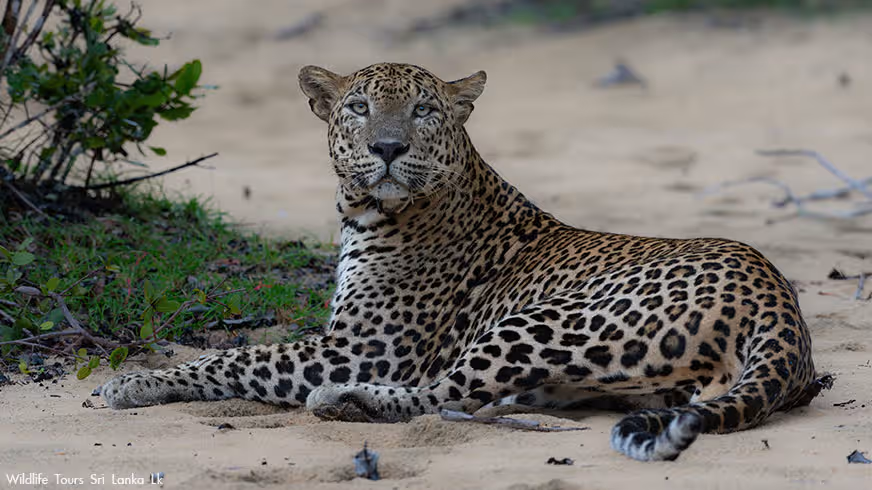
The leopard is the largest of Sri Lanka’s four wild cat species and is considered the island’s apex terrestrial predator. Its coat is generally rusty-yellow to golden, covered with dark spots and rosettes. Individual leopards can be recognized from their markings, although research has shown that some markings can change over time, making reliable identification more complex than simply comparing a few spots.
One of the most interesting aspects of Sri Lankan leopard research is individual identification. Researchers associated with Sri Lanka’s Department of Wildlife Conservation developed a multi-point identification approach to improve the accuracy of recognizing individual leopards.
How to Identify an Individual Sri Lankan Leopard
One of the most fascinating aspects of leopard photography is individual identification.
Every leopard has a unique combination of spots and rosettes. Wildlife researchers and experienced leopard observers can use these patterns, together with facial markings, body characteristics, scars and other features, to distinguish individuals.
However, identification is not always straightforward. Research conducted with the Department of Wildlife Conservation demonstrated that leopard markings can change over time and proposed a multi-point identification method to reduce errors.
For wildlife photographers, this makes maintaining accurate records of photographs, dates, locations and individual characteristics especially valuable.
Experience Sri Lankan Leopard Safaris with Wildlife Tours Sri Lanka
If seeing a Sri Lankan leopard in the wild is one of your travel goals, choosing the right safari experience can make a significant difference.
Wildlife Tours Sri Lanka specializes in wildlife-focused experiences across the island, including leopard safaris, private wildlife tours, wildlife photography tours and multi-day wildlife adventures.
Our wildlife experiences cover some of Sri Lanka’s most important wildlife destinations, including Wilpattu, Yala, Kumana and Horton Plains. Our website also allows travelers to explore different wildlife experiences and create a tour based on their interests, available time and preferred destinations.
The team has extensive field experience, and the website currently highlights experienced wildlife guides, private and flexible tours, wildlife photography services, camera and telephoto lens rental, and comfortable vehicles and safari jeeps.
Whether your dream is to photograph a leopard in the early morning light, explore Wilpattu’s forests, experience Yala’s diverse habitats or combine several national parks into one wildlife adventure, we can help you plan a personalized journey.

